
Bag Manufacturer in Bangladesh: Delivery, School & Tote Bags
Bangladesh rarely gets credit for what it quietly does well. Garments dominate the headlines — and rightfully so — but tucked inside the same factories, warehouses, and supply chains is a bag manufacturer in Bangladesh that has grown steadily over the last decade into something worth paying attention to. From school bags on the backs of children in Chittagong to tote bags on retail shelves in Amsterdam, the country’s output is wider than most outsiders assume. SIHA Bag Factory sits near the front of that story.
Bag Manufacturer in Bangladesh: A Growing Industry Force
Ask most people what Bangladesh makes, and you will hear one answer: clothes. That answer is accurate enough, but it misses something. The same industrial corridors that house garment operations have, over time, given rise to a bag manufacturing sector that now serves buyers across four continents. It did not happen overnight, and it was not the result of any single policy or investment — it was gradual, iterative, and driven largely by manufacturers who figured out how to compete on more than just price.
What Actually Makes Bangladesh Competitive
The country’s advantages are real, if sometimes overstated. Labour costs remain low relative to China and Vietnam. Fabric and material supply chains are already in place from decades of garment production. Port access through Chittagong keeps logistics manageable. None of this guarantees quality — plenty of low-end products come out of Bangladesh too — but it creates conditions where a well-run factory can produce bags that hold up on the global market without pricing itself out of consideration.
Today, the industry spans hundreds of factories producing everything from insulated delivery pouches to structured school backpacks to screen-printed promotional totes. Buyers from Europe, the Middle East, and North America appear to be sourcing here in growing numbers — a pattern that may suggest the sector is reaching a kind of inflection point in terms of international recognition.
Meet SIHA Bag Factory
There is no shortage of bag manufacturers in Bangladesh. Finding one is easy. Finding one that actually delivers — consistently, across different product types, at scale — is a different question. SIHA Bag Factory has spent its years in the industry building the kind of track record that makes that question easier to answer.
Why Product Range Reflects Manufacturing Maturity
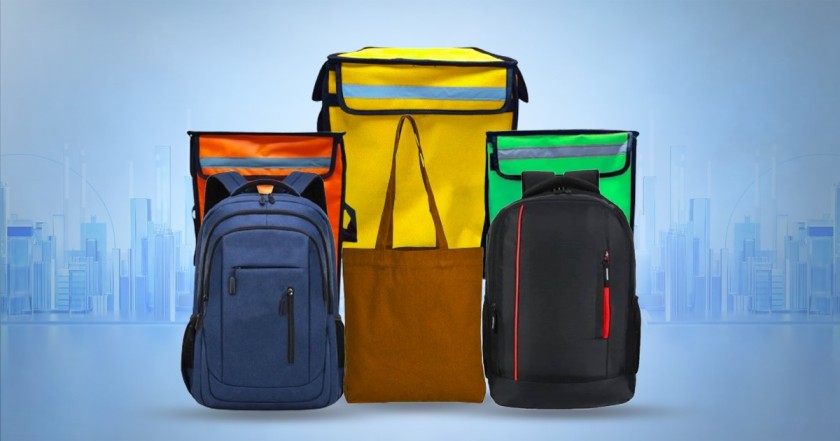
Based in Bangladesh, SIHA manufactures bags across a wider range of categories than many of its competitors. That breadth matters. A factory that only produces tote bags will struggle if a client needs a delivery pouch with thermal lining. SIHA appears to have invested in production capacity that covers multiple bag types without the quality tradeoffs that often come when manufacturers stretch beyond their core competency.
The operation runs on modern equipment, but equipment alone does not explain the output. The craftspeople — many of whom have worked in the broader textile sector for years — bring a level of finishing detail that shows up in the final product. Stitching, seam alignment, zipper tension: these are the things that separate a bag that lasts eighteen months from one that lasts eighteen weeks.
“SIHA Bag Factory is committed to delivering every order with precision — combining traditional craftsmanship with modern manufacturing standards to produce bags that last, perform, and impress.”
Delivery Bag Manufacturer: Built for the Last Mile
The delivery bag market did not really exist in its current form a decade ago. What changed it was not any single technology — it was the convergence of food delivery apps, same-day ecommerce, and a consumer expectation that orders would arrive intact, at the right temperature, without the packaging looking like it had been sat on. That shift created a product category with surprisingly demanding technical requirements.
A delivery bag has to do a lot of things at once. It needs to be insulated well enough to keep biryani warm across a forty-minute ride in Dhaka traffic. It should repel rain without becoming a sauna for the food inside. Zippers need to open and close hundreds of times a week without failing. Straps need to sit comfortably on a courier’s back or shoulder without cutting off circulation after two hours. These are not glamorous engineering problems, but getting them wrong has real consequences for the businesses using the bags.
Delivery bags address these requirements directly. Their production for this category includes:
- Thermal insulation lining rated to maintain temperature across typical urban delivery windows
- Reinforced stitching at stress points, with zippers selected for high-cycle durability
- Waterproof exterior fabrics appropriate for year-round outdoor use
- Adjustable, padded straps sized for different rider builds
- Custom branding through embroidery, screen printing, or heat transfer
For businesses running delivery fleets — whether that is a restaurant chain, a courier company, or an e-commerce logistics provider — the economics of bag quality are fairly straightforward. A bag that lasts twice as long costs less over time, even if it costs more upfront. Fewer replacements also means less supply chain friction. SIHA’s positioning as a delivery bag manufacturer appears to recognise this, building product specifications around durability rather than just initial price point.
School Bag Manufacturer: More Than Just a Backpack
School bags occupy a strange position in manufacturing. They are bought primarily by parents, used primarily by children, and evaluated on a set of criteria that rarely includes the things most marketers focus on — brand prestige, aesthetic novelty, or technical specification. What actually matters to a parent in Dhaka or Sylhet is whether the bag will hold up for a full school year, whether it fits their child comfortably, and whether it costs a reasonable amount. That is a harder brief than it sounds.
Where Ergonomics and Daily Reality Actually Meet
SIHA produces school bags that take these practical requirements seriously. The ergonomic design consideration — padded back panels, adjustable shoulder straps — is not just a marketing claim. Poorly designed school bags do cause postural strain in children who carry heavy loads daily, and the difference between a well-padded back panel and a cheap flat one is noticeable within a week of use.
The organizational features matter too. Students at secondary level in Bangladesh may carry six or seven subjects’ worth of materials on any given day. A bag with a single main compartment forces everything into a pile; a bag with dedicated pockets and dividers makes the daily routine of packing and unpacking faster and less frustrating. Small things. But small things add up.
Key design features across school bag range include:
- Padded back panels with ventilation channels to reduce heat buildup
- Adjustable shoulder straps with load-distribution stitching
- Multiple compartments including laptop-safe padding for older students
- Reinforced bottom panels and zip heads rated for daily use
- A wide selection of sizes, colours, and prints suited to different age groups
SIHA supplies school bags to local distributors, retail chains, and educational institutions, and takes on custom orders for schools wanting branded designs or NGOs sourcing bags for underserved student populations. The minimum order flexibility appears to be one of the reasons both large and smaller buyers come back.
Tote Bag Manufacturer: A Market That Keeps Expanding
The tote bag has had an interesting few years. What started as a practical alternative to singleuse plastic — driven partly by regulation, partly by consumer sentiment — has quietly become one of the most versatile product categories in branded merchandise. Retailers use them. Conference organisers use them. Luxury brands use them. NGOs use them. The use cases have multiplied, and so has the range of specifications buyers are looking for.
Bangladesh was well-placed to capture a share of this demand. Jute, cotton, and canvas — the core materials for most tote bags — are either locally available or easily imported through established textile channels. Labour costs are competitive. And the manufacturing skill base that developed around garment production transfers reasonably well to bag construction.
Tote bag production covers the main categories the market asks for:
- Canvas tote bags — workhorses of the retail and corporate gifting market
- Non-woven polypropylene totes — cost-effective for high-volume promotional use
- Cotton and jute options — for brands with sustainability commitments that go beyond a logo
- Laminated finishes — for buyers who need water resistance with a cleaner aesthetic
- Fully custom printed and embroidered designs — across all of the above
One thing worth noting: the gap between a cheap tote and a good one is mostly invisible until the handles separate from the body after three uses. SIHA’s approach to this category — reinforced handle attachment points, consistent print registration, material weights that match the stated use case — seems designed to avoid that particular failure mode, which is more common in the tote market than buyers often expect.
Why Source from a Bag Manufacturer in Bangladesh?
This is a reasonable question to ask, and the honest answer is: it depends on what you are buying, how much of it you need, and what your quality threshold is. Bangladesh is not the right answer for every brief. But for a wide band of buyers — particularly those sourcing medium to large volumes of delivery bags, school bags, or tote bags — the country’s manufacturing sector offers a combination of factors that is genuinely difficult to match elsewhere.
A Workforce With Relevant Experience
Decades of garment production have created a labour pool with real skills in cutting, stitching, and finishing. The transition to bag production is not frictionless, but it is shorter than starting from a base with no textile tradition. The quality of handwork in well-run Bangladeshi factories — SIHA among them — appears to reflect that accumulated experience.
Improving Compliance and Worker Welfare Standards
The Bangladesh garment sector’s compliance record has been uneven historically, and it would be misleading to suggest otherwise. But there has been measurable progress since 2013, driven by a combination of international buyer pressure, government reform, and factory-level investment. Many manufacturers — SIHA among them — now operate under standards frameworks that would satisfy the ethical sourcing requirements of most international brands. Buyers with strong compliance commitments should still do their own due diligence, but the baseline has shifted.
SIHA Bag Factory: A Partner Worth Considering
Choosing a manufacturing partner is one of those decisions that looks straightforward on paper and turns out to be anything but. A factory that quotes well and samples beautifully can still fail to deliver on time, or at the volume promised, or at the quality level that the sample implied. The relationship between a brand and its manufacturer is closer to a working partnership than a simple transaction — and partnerships require a certain kind of operational consistency that not every factory can sustain.
SIHA Bag Factory’s reputation appears to rest on exactly this kind of consistency. From the first sample through to final delivery, the communication is clear, the timelines are maintained, and the product that arrives matches what was specified. That sounds like a low bar. In practice, in the context of international manufacturing, it is not.
The product range — delivery bags, school bags, tote bags, and more — means that buyers who start with one category have a realistic path to consolidating their sourcing with a single partner as their needs grow. That kind of relationship, built on repeated successful orders rather than a single transaction, is what most businesses are actually looking for when they talk about finding a ‘trusted manufacturer.’
Ready to Source Quality Bags from Bangladesh?
Get in touch with SIHA Bag Factory to discuss your product requirements, request samples, or explore custom manufacturing options.