
Best Delivery Bags: A Practical Guide to Choosing What Actually Works
Let’s be honest — delivery bags are not the most glamorous part of running a logistics or food delivery operation. They generally give it one thought, buy it in bulk, and leave it at that. Then, three months down the road, you have failed zippers, insulation issues, and delivery people arriving at your clients’ doors with bags that appear to have made their way through a small flood.
This bag is more important than many realize. This could be because it is the only tangible item your client sees from your company throughout the process of the sale. This guide covers what actually separates a quality delivery bag from a disappointing one — types, materials, features that hold up over time, and why manufacturers like SIHA Bag Factory in Bangladesh are worth considering when you start thinking about sourcing.
Why the Right Delivery Bag Can Make or Break Your Operation
There is a reasonable argument that temperature retention and physical protection are table stakes at this point. When customers buy any kind of food or perishable goods, they already have certain expectations. The thing that separates one service from another usually comes down to how consistent the delivery process is, whether all orders arrive in the same condition regardless of weather, distances, and drivers.
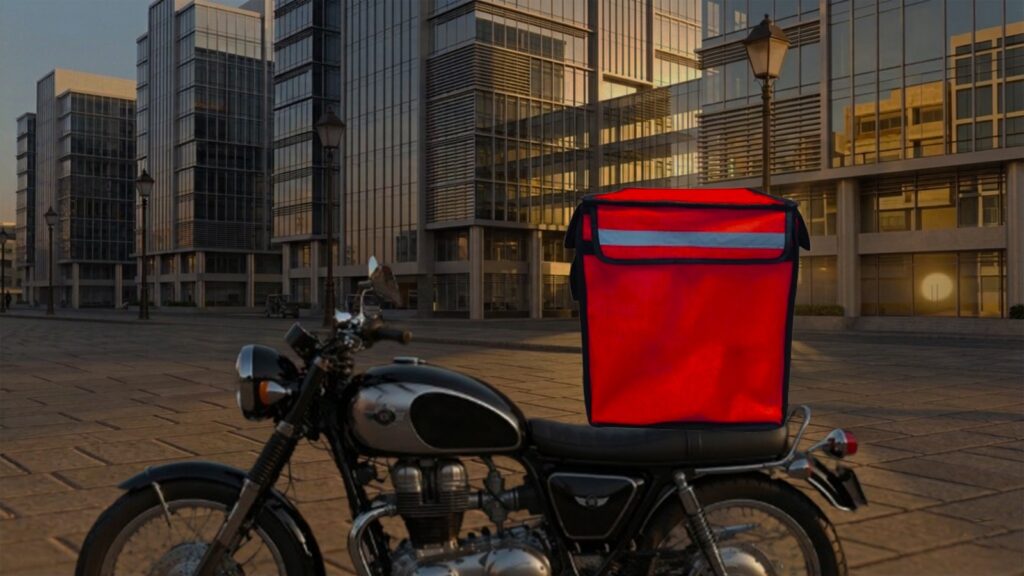
However, bags serve multiple purposes, and it makes sense to consider all of them:
- Product protection — from bumps, leaks, wetting, dust. While it may not matter as much as many operators believe until they face some issues, product safety does become important.
- Temperature management — especially in cases of food and pharmaceutical deliveries. Sometimes a small 10 degrees change in temperature can mean an unsatisfied customer or violation of regulations.
- Brand awareness — when your bag passes by on the streets, in apartments, in offices, it becomes advertising on its own, even if it remains unnoticed.
- Comfort for drivers — uncomfortable bags reduce the speed of work and make drivers tired. In turn, the effect builds up during the entire shift.
- Environmental impact: A lasting bag creates a positive environmental impact in comparison to plastic bags; furthermore, there are now a growing number of consumers who care about the environment and would like to know how to…
None of the above items work alone; if a reusable bag offers a high insulation value but also makes you unable to drive after 2 hours then it won’t be worth the purchase.
Types of Delivery Bags: What the Options Actually Are
The market has fragmented considerably over the past few years, partly because delivery categories have multiplied. Food, groceries, pharmaceuticals, e-commerce parcels, flowers — each has somewhat different requirements, and bag manufacturers have mostly kept pace.
Insulated Food Delivery Bags
These are the workhorses of the food delivery world. The core function is thermal retention — keeping hot food hot and cold food cold for the typical 20-to-45-minute delivery window. The quality of the insulation lining (usually a foam layer or foil-backed material) varies considerably between manufacturers. Thicker is not always better; the quality of sealing at zippers and seams tends to matter just as much. Restaurants, pizza chains, cloud kitchens, and meal kit companies are the primary buyers here.
Backpack Delivery Bags
Backpack-style bags are designed for couriers on motorcycles or bicycles — situations where both hands need to be free and weight distribution is genuinely important. A poorly balanced backpack on a two-hour shift is a real ergonomic problem. The better versions have padded shoulder straps, a chest strap for stability, and waterproof outer fabric. The interior is usually insulated. This style has become dominant in urban food delivery, where narrow streets and traffic make cars impractical.
Box-Type and Cube-Style Bags
The box format — a rectangular bag with a rigid or semi-rigid structure — is particularly useful when you are carrying multiple containers that cannot tip. Drinks, stacked boxes, fragile items. The flat bottom is the defining feature; it keeps everything upright. These tend to sit in the passenger footwell of a car rather than being worn. Zipper placement at the top, rather than the side, is worth checking since it affects how easily a driver can access the bag one-handed.
Courier and Parcel Bags
For e-commerce and document delivery, the requirements shift considerably. Insulation is irrelevant; what matters is tear resistance, some level of tamper evidence, and a range of sizes. Courier bags for logistics companies often need to accommodate awkwardly shaped items and take serious abuse. The reinforcement of stitching where stress occurs differentiates between a bag lasting a year and a bag breaking after just six weeks.
Reusable and Low Impact Bags
Bags created using recyclable and biodegradable materials are becoming increasingly popular. This is partly because companies have set out to achieve certain sustainability goals and partly because consumers are expecting their products to be sustainable. The honest truth is that while some products do claim to be sustainable, there is no guarantee that this is the case. It is always prudent to ask specific questions about the material used and its durability.
Features to Consider When Purchasing
There is growing demand for bags made from recycled or biodegradable materials — driven partly by corporate sustainability targets and partly by customer expectation. The honest caveat here is that ‘eco-friendly’ is sometimes a marketing claim more than a material reality. When evaluating these options, it is worth asking specifically what the material is, how it was certified, and what the actual durability looks like under repeated use.
Features Worth Evaluating Before You Buy
The spec sheet for a delivery bag can look impressive and still disappoint in practice. These are the areas where real differences tend to show up:
- Outer fabric — Oxford nylon or heavy polyester are generally the reliable choices. Both resist abrasion and handle moisture reasonably well. Lighter fabrics may save weight but tend to wear through at friction points faster than expected.
- Insulation quality — for thermal bags, ask about the lining thickness and whether there is a sealed layer at the zipper. A bag that insulates well across the main body but leaks heat at the opening is only doing half the job.
- Capacity and sizing — this sounds straightforward but is often misjudged. Think about your actual average order, not your largest order. A bag that is consistently too large causes shifting and spillage; one that is slightly tight causes driver frustration.
- Closure mechanism — double zippers are meaningfully better than single, both for sealing and for access. Velcro deteriorates faster than zippers in most real-world conditions, particularly in humid climates.
- Carry options — if your operation uses multiple delivery modes, a bag with both backpack straps and a top handle gives drivers flexibility without requiring separate equipment.
- Interior cleanability — delivery bags get food residue, moisture, and general grime inside them constantly. A wipeable lining or removable insert is worth prioritizing. Fabric interiors that cannot be cleaned become unhygienic surprisingly quickly.
- Branding options — custom printing is increasingly standard rather than premium. If you are ordering at any meaningful volume, there is usually no strong reason not to have your logo on the bag.
- Stitching at stress points — the handles, the zipper attachments, and the corners of box-style bags are where failure typically begins. This is not something you can assess from a photo; requesting a sample is the only reliable way to check.
Matching Bag Type to Industry: A Practical Overview
The general-purpose delivery bag is a reasonable starting point, but specific industries have developed fairly clear preferences based on operational experience:
Food delivery and restaurants: Insulated backpacks or box-type bags with genuinely effective thermal lining. Spill-resistant interiors save a meaningful amount of cleaning time over the course of a week.
Grocery & Supermarket Delivery: Big capacity insulated totes, capable of holding weights because groceries tend to be heavy, whether chilled or not.
E-commerce and Couriers: Lighter, durable courier bags, available in different sizes. Security features are recommended in case of sensitive items.
Medical and Pharmaceuticals: Insulated bags designed to maintain narrow temperature limits. Some countries require compliance with certain standards – verify beforehand.
Floral and Gift Delivery: Taller bags that help keep flower arrangements upright. The aesthetic experience on delivery tends to matter more in this category than in most others.
How to Actually Choose: Cutting Through the Decision
Most operators over-complicate this. The core questions are simpler than the market makes them appear:
- What are you delivering, and what are its physical requirements? Hot food, fragile items, and parcels have genuinely different needs. Start here before looking at any product listings.
- How are your drivers delivering — car, motorcycle, bicycle? The answer shapes form factor more than anything else.
- What volume will each bag handle per day? A bag doing 30 deliveries daily needs to be built differently from one doing five.
- What is your per-unit budget, and are you thinking about cost per delivery rather than just unit price? A bag that costs twice as much but lasts four times as long is the better economic choice.
- Do you need custom branding? If yes, build that into your requirements from the start rather than treating it as an afterthought.
- Can you test before committing? Any reputable manufacturer should be willing to send samples.
If they are not, that is itself useful information.
SIHA Bag Factory: A Manufacturer Worth Knowing About
Sourcing from the right manufacturer matters at least as much as selecting the right bag type. One Bangladesh-based operation that has built a solid reputation in this space is SIHA Bag Factory — producing delivery bags for both domestic clients and international buyers.
Background
The country has an existing manufacturing sector for textile and bag products, and SIHA Bag Factory operates in the midst of the same environment. The factory manufactures various delivery bag types like insulated food bags, courier bags in backpack style, thermally insulated boxes, and specially customized bags, made from materials such as Oxford cloth and heavy-duty nylon.
What Makes Them Worth Considering
- Product range — they cover most of the main delivery bag categories, which means buyers can consolidate sourcing rather than working with multiple suppliers.
- Durability — It would seem that the selection of Oxford cloth and high-quality insulation material is the result of an informed decision regarding durability, not cheap input costs.
- Customization — The products can be customized with the addition of a company’s logo, tailored to specific dimensions, and supplied in the company’s color schemes.
- Cost — The production cost structure in Bangladesh allows for competitive prices, which becomes especially important for smaller and medium companies unable to afford higher input costs elsewhere.
- Production scale — the capacity to fulfill both small and large orders is practically useful for businesses at different growth stages.
- Quality control – SIHA performs quality control inspections throughout the production process from material entry up until the final products. This may be verified by a sample order as is standard practice for any manufacturer.
- Exporting experience – They have had dealings with clients based in the Middle East, Southeast Asia, and Europe, meaning that they understand the needs of international buyers when it comes to export procedures and communication channels.
If considering their services, it may be worthwhile to request that they conduct a sample order.
How to Extend the Life Span of Your Bags: Maintenance that Matters
Well-manufactured bags will deteriorate faster than necessary without proper maintenance. Some tips that make a difference include:
- Clean the interior after each shift – residues left overnight in the bag act as breeding ground for bacteria and hasten deterioration of interior lining. Five minutes and a moist towel will do.
- Allow bags to air completely dry before storing closed – any water retained in the bag promotes mold formation and decreases its insulation capacity.
- Avoid overloading bags regularly – excess strain on bags is concentrated where handles
- Check zipper condition periodically — a small amount of zipper lubricant applied every few weeks keeps them running cleanly and prevents the kind of partial failure that suddenly becomes a full failure mid-shift.
- Fix small problems early — a loose thread at a seam or a small tear is a 10-minute repair. Left for a month, it becomes a replacement.
- Rotate your stock — if you have 20 bags in circulation, varying which ones are used heaviest distributes wear more evenly and gives you better visibility into which bags are aging.
Where the Industry Appears to Be Heading
A few developments seem likely to shape what the best delivery bags look like over the next few years, though some of these are still early-stage:
- IoT temperature monitoring — small embedded sensors that log temperature throughout a delivery run. Useful for pharmaceutical and premium food operators, and potentially a liability protection tool in regulated industries. The technology exists; wide adoption is still limited by cost.
- Sustainable material sourcing — pressure from both buyers and end consumers is pushing manufacturers toward recycled and plant-based materials. The challenge is maintaining durability without inflating price. This is an area where manufacturing quality matters more than the marketing claim.
- Anti-bacterial interior treatments — post-2020, hygiene standards in food delivery have tightened in many markets, and interior linings with anti-bacterial properties are increasingly specified. Whether the treatment holds up over repeated cleaning cycles is worth verifying.
- Modular designs — bags that can be adjusted in volume or reconfigured for different cargo types are gaining traction, particularly among operations that handle varied order sizes.
- Lighter high-strength fabrics — material science is gradually making bags lighter without compromising structural integrity. For couriers doing full-day shifts, even a 200-gram reduction in empty bag weight may matter over time.
Final Thoughts
Delivery bags sit in an odd category — too important to ignore, not important enough that most businesses think carefully about them until something goes wrong. The good news is that getting this right is not complicated once you know what to look for.
Choose based on your actual delivery type and method. Prioritize stitching quality and closure reliability over aesthetics. Test before you commit to volume. And if you are sourcing from Bangladesh,
SIHA Bag Factory is worth a conversation — they produce across the main bag categories, offer customization, and have the experience to handle international orders without friction.
The right bag will not transform your business on its own. But it will stop being something your drivers complain about, which is a reasonable place to start.