
Custom Bag Design: Why the Manufacturer You Choose Changes Everything
There is an issue with the bag manufacturing industry which is hardly spoken about: those customers who are seeking a customized bag have no clue how to go about it and even the suppliers who would assist in the process are lost amid multiple intermediaries, distributors, and confusing search engines online.
This guide is an attempt to cut through that. Whether you are a startup founder who needs 200 branded totes for a product launch, a fashion label looking to manufacture a full private-label range, or a procurement manager sourcing corporate travel bags — the fundamentals are the same. Get the design right. Understand your materials. And work with a manufacturer who actually knows what they are doing.
We will also introduce SIHA Bag Factory, a Bangladesh-based custom bag design manufacturer that has built a reputation, quietly and steadily, on getting these things right.
So, What Does Custom Bag Design Actually Mean?
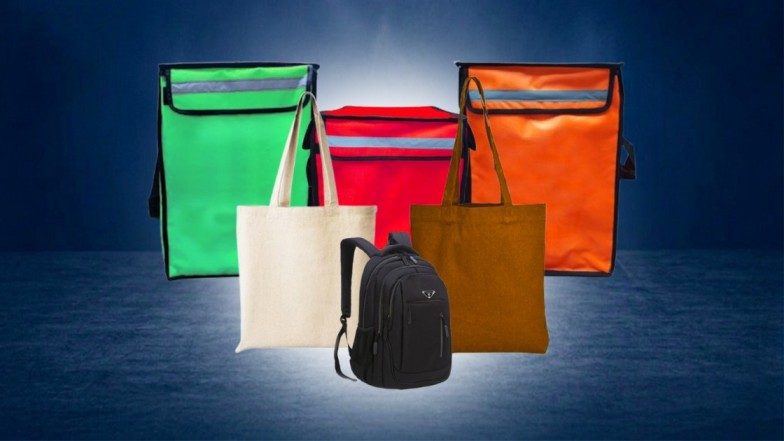
It sounds obvious, but it is worth unpacking. Custom bag design is not simply slapping a logo on an existing product — though that is a version of it. At its fullest expression, custom bag design means starting from a blank brief and arriving at something that did not exist before.
The design of the bag affects all aspects of its design, such as its silhouette and shape (should it have a stiff frame or collapse completely?), which fabrics should be used on the outside and inside, how heavy the hardware should be, how it will be compartmentalized, how it will be branded through embroidery, printing, embossing, or label, and even what stitching style is used.
The categories span a wide range. Tote bags, backpacks, duffel bags, sling bags, laptop sleeves, drawstring pouches, structured clutches, weekenders. Each has its own structural logic and material requirements. A gym bag and a leather laptop bag may both be called custom bag designs, but the manufacturing process for each is almost entirely different.
That breadth is part of why custom bag design has expanded so significantly across industries. Retail brands use it for packaging with personality. Corporate teams use it for employee gifts that people actually keep. Schools, charities, event organisers, fitness brands — the use cases are now almost endless.
Why Businesses Commission Custom Bags in the First Place
The honest answer is that it depends on the business. But a few motivations come up again and again, and they are worth naming clearly.
Brand visibility that costs less over time
A printed tote bag carried through a city is, in effect, a moving advertisement. The unit cost of that impression — compared to a digital ad that disappears the moment the budget stops — is remarkably low over the bag’s lifetime. For brands that sell physical products, in particular, a well-designed custom bag may offer better long-term return on spend than many conventional marketing formats.
Standing apart from mass-produced alternatives
Off-the-shelf bags are designed to appeal to nobody and everybody simultaneously. Custom bag design inverts this: the goal is a product with a specific feel, for a specific person, that says something particular about the brand or individual behind it. That specificity tends to command higher perceived value — which, depending on the context, can translate into higher retail pricing or stronger brand loyalty.
Control over what the product actually is
Working directly with a custom bag design manufacturer means you set the standards. You approve the stitching density. You’ll choose whether the zipper pull is nickel-plated or brass-finished. You decide if the lining is printed or plain. That kind of control is simply not available when you are buying from stock. For quality-conscious brands, it is not a luxury — it is the whole point.
Sustainability as a genuine option
Mass-production supply chains are not well-suited to eco-material sourcing. Custom bag design is. When you commission a bespoke run, you can specify organic cotton canvas, undyed jute, or fabric made from recycled PET bottles — and you can do so at meaningful quantities. For brands whose customers care about environmental impact, this may be one of the more honest ways to act on those values.
The Design and Production Process: What to Expect
First-time clients tend to underestimate the amount of decision-making involved. When working with a quality manufacturer, you’ll find that the process looks something like this.
Step 1: Define the brief
What is the bag for? Who will bear it, and under what circumstances? How much do you need, and when? What is the budget per unit? These questions may sound simple, and the answers influence every decision that comes after. Vague briefs produce vague results. The more specific you can be in the beginning — even if certain details change as you continue — the smoother the process usually is.
Step 2: Concept development and design
At this stage you translate the brief into a concept. Good manufacturers will provide in-house design support; they will sketch options, produce digital renders and often send physical material swatches before anything is made. A competent factory team will update and interpret what you have provided, highlight any points that could cause issues during production.
Step 3: Material selection
Fabric, lining, webbing, hardware, thread — each component needs to be chosen with the end use in mind. A beach tote needs different waterproofing from a commuter backpack. A luxury leather clutch requires different handle reinforcement from a canvas shopper. Your manufacturer should walk you through the options with samples where possible, not just a catalogue.
Step 4: Sample production
This is arguably the most important phase. A physical sample reveals things that no render can: how the hardware sits, whether the zip pull catches on the fabric, how the straps feel under weight. Review the sample critically. Ask for revisions. Do not approve it out of impatience — that decision tends to come back in bulk.
Step 5: Production and quality checks
After the sample is approved, bulk production starts. During production, a reputable manufacturer will conduct staged quality inspections — seam strength, colour consistency, hardware alignment and dimensional accuracy. Third-party inspection is also available by the client before shipment. It is rarely a bad idea.
Step 6: Shipment and delivery
Packaging, labelling, shipping documentation, lead time — all of this should be agreed in advance. International orders in particular benefit from a clear written agreement on Incoterms, so there are no surprises about who bears the cost of customs clearance or freight delays.
A Note on Materials: What the Choice Actually Affects
Material selection is one area where clients sometimes defer too quickly to the manufacturer’s defaults. It is worth understanding the trade-offs.
- Canvas: Mid–heavy weight woven cotton. Holds its shape well, takes to printing and embroidery neatly and ages in a way that is attractive to many people. Weight very much matters — a 10oz canvas acts totally different from a 16oz.
- Leather: Full-grain vs. top-grain vs. split-grain vs. bonded vs. PU — these are not interchangeable terms. Real leather at the higher end provides durability and character; synthetic counterparts have improved immensely, have less environmental overhead. Know which you are specifying.
- Nylon and polyester: Considered functional fabrics that do not necessarily look attractive, though high denier nylon is highly durable and waterproof. In case it is used right, it can be utilized in the production of technical bags wherein function takes precedence over design.
- Jute: This type of material is both biodegradable and has unique texture. Ideal for shopping and tote bags. Should not be used for rigid bags and items that will experience extensive use.
- Recycled materials: Most commonly refer to rPET or recycled polyester made from plastic bottles. It has become quite popular at present. Also easy for businesses to obtain such materials.It’s worth checking if sustainability is a key factor.
Choosing a Custom Bag Design Manufacturer: What to Actually Look For
This is where most of the risk lives. A good design can be undone by poor manufacturing, and a poor manufacturer can cost far more — in time, money, and reputation — than the savings that initially made them attractive. A few things are worth examining carefully.
- Experience that matches your product category — not just general bag-making experience. A factory that excels at fashion clutches may not have the technical setup for load-bearing hiking bags.
- A willingness to show you samples of previous work, and ideally connect you with a reference client. Reputable manufacturers are generally comfortable with this.
- Clarity on minimum order quantities before you get too far into conversation. MOQs vary widely — from as few as 50 units to several thousand — and misalignment here can waste a lot of time.
- A quality control process that is documented, not improvised. Ask what inspections happen at which production stages, and what the protocol is if defects are found mid-run.
- Communication that is prompt and honest. This sounds self-evident, but a manufacturer who takes three days to respond to a pre-sale enquiry may not be someone you want managing a time-sensitive production run.
- Transparent pricing. A detailed quote that breaks out material costs, production costs, and shipping separately is a good sign. Lump-sum quotes with no breakdown can conceal later surprises.
SIHA Bag Factory: Custom Bag Design Manufacturing from Bangladesh
If you are looking for a custom bag design manufacturer in Bangladesh, SIHA Bag Factory is a name that appears consistently when you talk to people who have actually sourced from the region. They are not the loudest brand in the market, but they may be one of the more dependable ones.
What they offer is not complicated to describe: end-to-end custom bag production, from the initial concept stage through to bulk delivery, with a team that has enough experience to handle both the design and the manufacturing realities of bringing a bag to market.
The range of bag types they produce
SIHA Bag Factory works across a wide product range — totes, backpacks, laptop bags, gym bags, drawstring bags, duffel bags, school bags, and various corporate bag formats. That breadth matters. It suggests a manufacturing setup versatile enough to handle different structural and material requirements, rather than a factory optimised for one product type that has expanded its catalogue on paper only.
Materials and pricing
They work with canvas, leather (genuine and synthetic), nylon, polyester, jute, and recycled fabrics. The ability to source eco-materials without lengthy lead time is worth noting for clients with sustainability commitments. Pricing is competitive relative to South and Southeast Asian alternatives — not because corners are cut, but because Bangladesh’s manufacturing cost structure is genuinely lower than many comparable countries. That gap typically translates into better value at equivalent quality levels.
Their production facilities
SIHA Bag Factory operates out of Bangladesh, which is not incidental. The country has developed one of the more sophisticated garment and soft goods manufacturing ecosystems in the world over the past three decades. Access to skilled stitching labour, established fabric and hardware supply chains, and well-developed export infrastructure are structural advantages that individual factories benefit from by being embedded in that ecosystem.
Quality control
Every production run goes through multi-stage inspection. The stated goal — that what is approved at sample stage should match what arrives in bulk — is a reasonable benchmark for what any credible manufacturer should
Why Bangladesh? A Practical Answer
This question comes up regularly from international buyers, and it deserves a direct answer rather than a promotional one.
Bangladesh has the second-largest garment and textile manufacturing sector in the world by export volume. That scale is not irrelevant — it means decades of accumulated expertise in stitching, pattern-making, quality control, and international logistics. The labour force in this sector is experienced. The supply chains for fabric, hardware, and ancillary materials are well-developed. Port infrastructure, particularly through Chittagong, handles substantial international freight volume routinely.
Labour costs are lower than in many comparable manufacturing countries, which creates a real pricing advantage for buyers. That advantage has, in some cases, historically come with concerns about working conditions — a legitimate issue in the industry broadly. SIHA Bag Factory, like many export-focused manufacturers, operates under international buyer standards that include labour practice requirements. It is worth asking any manufacturer about their compliance framework directly.
Moreover, the Bangladeshi government provides export incentives to firms catering to the international market, which could also serve to decrease costs for purchasers. In terms of structural factors, all of these points contribute to the explanation for the placement of Bangladesh among the list of potential suppliers, as opposed to being just an automatic choice.
What Is Happening in Custom Bag Design Right Now
The market is shifting in a few directions at once. None of these are predictions — they are patterns visible in what clients are currently commissioning.
Sustainability as a specification, not a selling point
The shift here is subtle but real. Buyers who previously described eco-materials as a ‘nice to have’ are increasingly making them a baseline requirement. rPET fabric, undyed natural fibres, and reduced-hardware designs are all showing up in briefs more consistently than they did even two years ago. Manufacturers who can handle these materials without adding significant lead time or cost are at an advantage.
Restrained visual design
Heavily logoed, maximalist designs appear to be losing ground — at least in certain market segments — to bags that carry branding more quietly. A tone-on-tone embroidered logo. A woven label inside rather than a print outside. This shift towards understatement may reflect broader consumer fatigue with overt brand advertising, or simply a maturation of taste in the corporate gifting and lifestyle markets.
Bags that do more than one thing
Convertible straps, detachable pouches, reversible designs, bags that compress into a packable format. The appetite for multifunctionality is growing, particularly among urban consumers who want to carry fewer items while handling more contexts in a day. This puts pressure on manufacturers to handle more complex construction — which is, again, an argument for working with experienced rather than purely low-cost producers.
Personalization at the individual level
Advances in digital printing and embroidery now make it economically viable to produce small runs with meaningful variation between units — names, initials, individual colour choices. This is no longer the exclusive territory of premium brands. For manufacturers set up to handle it, it opens a new product category: mass personalization.
Technology integration
USB charging ports, RFID-blocking panels, GPS tracker pockets, anti-theft zip configurations — these are moving from niche products into more mainstream brief requirements. They are not yet universal, but a manufacturer who has never handled them before will struggle to deliver them well under a tight timeline.
Closing Thoughts
Custom bag design is genuinely complex work. The product has to function well, look right, represent a brand accurately, survive the manufacturing process without losing what made the design compelling, and arrive in the condition it was approved in. That chain of requirements is longer than it looks from the outside.
Getting it right depends, more than almost any other factor, on choosing the right manufacturing partner. That’s the sort of partner with which we would like to collaborate: with experience, effective communication skills, versatile capabilities with respect to various types of bags, and with ties within a manufacturing network, Bangladesh, which has proven itself worthy of global supply chain participation.
For those who are just starting out on a custom-made bag project, the first thing to consider doing is establishing communication. Send your message, get your samples, get a quotation from us. The distance between your idea and the product becomes much shorter when you have such a manufacturer at your disposal.