
Custom Bag Ideas: A Practical Guide to Getting It Right
There is something quietly telling about the way a gift arrives before anyone opens it. The bag itself — its weight, its texture, whether the handle digs into your palm or sits comfortably — already communicates something. That is, perhaps, the most underappreciated dimension of custom bag ideas: they are not merely containers. They are the first impression.
This may sound like an exaggeration, but consider how often a well-made gift bag gets folded and kept, reused for years, tucked into a drawer. Because it seems too good to throw away. A thoughtfully designed bag tends to outlast its contents. For businesses and individuals alike, that kind of longevity — quiet, unhurried, genuinely useful — is harder to buy than most marketing budgets acknowledge.
This guide works through the most practical and considered custom bag ideas available today. From everyday retail packaging to occasion-specific gift bags. The aim is not to overwhelm with options, but to help you narrow down what actually suits your context, your recipient, and the message you want to send.
Why Custom Bag Ideas Deserve More Thought Than They Usually Get
Packaging tends to be treated as an afterthought — something to sort out after the real decisions have been made. That instinct is understandable. But it may also explain why so many branded bags end up in landfill within hours of being received. The design was functional, not considered.
The case for investing in custom bag ideas goes beyond aesthetics. Promotional bag studies consistently show that reusable branded bags generate more impressions per unit cost than most other advertising formats because people carry them in public and keep them for longer. The impression count compounds quietly over time.
But the marketing logic, while useful, is not the whole picture. A custom bag also communicates something more personal: that the sender paid attention. The right material for the right occasion, a size that actually fits what is inside, a finish that does not scuff or peel after one use — these details accumulate into a feeling that is difficult to articulate but immediately recognizable.
Advances in digital printing and global supply chains have, in recent years, made high-quality custom bags far more accessible than they once were. Small-batch orders are now viable. Sustainable material options have multiplied. Even individuals planning a single event can reasonably access the kinds of finishes that used to be reserved for large retail brands. The barrier, in most cases, is no longer cost or minimum order quantity. It is knowing what to ask for.
Best Ideas for Customer Gift Bag Design
Customer gift bags occupy a particular design challenge. They need to feel generous without looking generic, branded without feeling promotional, and practical enough that the recipient actually takes them home rather than leaving them on a table. Getting that balance right is harder than it sounds.
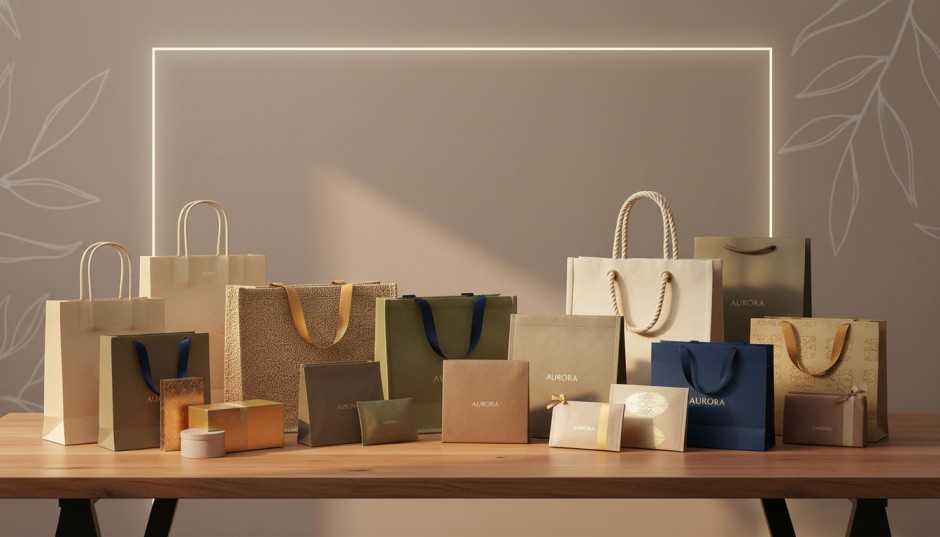
The best ideas for customer gift bag design tend to share one underlying principle. They start with the recipient, not the brand. What will this person carry? Where will they go after receiving it? What does the occasion call for? The answers to those questions usually point fairly quickly toward the right format.
Branded Kraft Paper Bags
Kraft paper has aged well as a material choice. It photographs clearly, accepts print without fuss, and carries a certain honest quality that many consumers now associate with smaller, more considered brands. For retail boutiques, artisan food producers, or any business that wants to suggest craft and care without overclaiming it, a well-printed kraft bag is difficult to improve upon.
Non-Woven Tote Gift Bags
If the primary goal is longevity of brand exposure, non-woven polypropylene totes are probably the most cost-effective option available. They are light, water-resistant, and hold a screen print or heat transfer well. More to the point, people keep them. A bag that gets used twice a week for a year represents a very different kind of marketing investment than a flyer or a digital ad.
Luxury Ribbon-Handle Bags
Coated paper with satin ribbon handles may seem like a small distinction from a standard paper bag, but the tactile difference is substantial. The ribbon handle alone changes how the bag is held, how it is perceived, and how long it is kept. For premium gifting — VIP client packages, high-value product launches, or upscale retail — the ribbon-handle bag signals an attention to detail that carries through to what is inside.
Eco-Friendly Jute Bags
Jute is having a genuine moment, and not purely because sustainability has become a marketing talking point. The material has a natural roughness that photographs interestingly, accepts screen print and embroidery with good definition, and holds its shape over years of use. For brands whose identity is tied to environmental values, jute is one of the few materials where the message and the medium actually align.
Foil-Stamped Paper Bags
Gold or silver foil on matte paper is one of those finishing combinations that has remained effective precisely because it is used sparingly. The contrast between the flat, absorbent matte surface and the hard reflective foil creates a visual weight that printed ink alone does not achieve. It works particularly well for brand names or monograms — small, precise, and unmistakable.
Full-Surface Photo-Quality Print Bags
Digital printing has quietly made full-bleed, photographic-quality artwork across an entire bag surface a genuinely affordable option. For seasonal campaigns, limited-edition collections, or brands whose visual identity depends on illustration or photography, this format allows the bag itself to become part of the creative work rather than just its packaging.
A note worth keeping in mind: custom tissue paper lining inside a gift bag costs very little at scale, but it changes the unboxing experience considerably. The moment of opening — the rustle of tissue paper, the reveal — is precisely what drives social media sharing. It is worth factoring in.
Custom Bag Ideas by Occasion: Matching Format to Context
The same custom bag does not work equally well across every setting. Context shapes expectation, and expectation shapes how a bag is received. A few observations by occasion:
- Corporate Events and Trade Shows. Branded non-woven or canvas tote bags with a logo, website, and clean layout serve well here. Attendees carry them around the event floor, which means they act as mobile signage throughout the day. Fill them with something useful — a notebook, snacks, a branded USB — and the bag is far more likely to leave the venue.
- Weddings and Celebrations. Personalized muslin or calico bags, tied with ribbon and stamped with names and a date, occupy a different register entirely. They are keepsakes as much as containers. The design should probably be restrained — the date and a simple motif tend to age better than elaborate artwork.
- Product Launches and Retail Promotions. High-gloss laminated bags with bold product photography work here — the format is unapologetically commercial, which is appropriate. The bag is part of the campaign.
- Seasonal and Holiday Gifting. Festive kraft bags with seasonal artwork — kept simple and well-executed rather than overcrowded — communicate warmth without expending enormous effort. The key here is print quality; muddy ink on a seasonal motif undercuts the entire effect.
- Schools and Nonprofit Events. Eco-friendly cotton bags screen-printed with a slogan or year serve both as practical items and as a record of the event. They tend to be kept for years, especially by participants who felt a meaningful connection to the occasion.
- Luxury and VIP Client Gifting. Structured rigid bags in premium materials — matte laminated board, velvet-touch coatings, embossed or foil-stamped logos — signal a level of investment that recipients notice and remember. The bag should feel, when lifted, like something was placed inside it with care.
Choosing the Right Material: Where Most Decisions Actually Get Made
Material selection is arguably where the most consequential decisions in the custom bag process occur, and also where the most confusion tends to arise. The material determines print quality, durability, environmental footprint, cost per unit, and — less obviously — the emotional register the bag occupies. A jute bag and a glossy laminated paper bag can carry identical branding and communicate entirely different things.
Paper
Available in kraft, glossy coated, and matte finishes, paper remains the most versatile single-use bag material available. It supports flexo, litho, and digital printing without significant quality trade-offs, and it is genuinely recyclable in most markets. The limitation is structural: paper bags are not well-suited to heavy contents or wet conditions, which matters for certain retail contexts.
Non-Woven Polypropylene
Perhaps the most widely used material for promotional tote bags, non-woven polypropylene is lightweight, water-resistant, and holds screen print and heat transfer designs with good fidelity. Its durability over repeated use makes it a reasonable choice for any context where the bag is expected to carry branded impressions over time rather than just for a single occasion.
Cotton and Canvas
Natural, breathable, and well-suited to embroidery as well as print, cotton and canvas bags carry a certain cultural weight in markets where environmental values are prominent. Farmers’ markets, independent bookshops, arts organizations, and lifestyle brands tend to reach for this material instinctively, and for good reason: it communicates craft and care in a way that synthetic alternatives do not.
Jute and Hessian
Jute is a bast fiber with a distinctly organic texture that photographs well and ages with character rather than looking worn. It pairs naturally with botanical and minimalist branding, and its sustainability credentials are substantive rather than merely claimed: jute requires minimal pesticide use and biodegrades fully. The trade-off is that fine detail printing can be difficult on its irregular surface.
Laminated and Luxury Finishes
Velvet-touch matte lamination, spot UV varnish, and specialty fabric linings exist in a different cost bracket. But they serve a specific and important function: they signal that the contents of the bag warranted this level of presentation. For luxury retail, high-value client gifts, and exclusive events, the material finish may be the single most powerful signal the bag sends.
Working with a Manufacturer: What to Look For
The gap between a good custom bag idea and a well-executed custom bag is, in most cases, the manufacturer. Print quality, material consistency, turnaround time, and minimum order flexibility vary considerably across suppliers, and these differences matter more than most buyers anticipate until they receive an order that does not match the sample.
Siha Bag Factory, based in Bangladesh, works across paper bags, non-woven totes, jute, canvas, and premium gift packaging. Their offer covers both small custom runs for boutique events and large-scale production for global campaigns, with end-to-end support from design consultation through to delivery. For businesses and individuals who want their custom bag ideas executed consistently and at competitive cost, they are worth considering at the outset of a project rather than as a fallback.
More information is available at Siha Bag Factory.
Design Principles That Actually Hold Up
Having a clear concept is a starting point, not a finished design. Execution involves a set of decisions that are easy to get wrong and difficult to fix after production. A few principles that tend to survive contact with the actual object:
Logo placement matters more than logo size
A bag that feels like a gift rather than an advertising tool encourages people to keep and reuse it longer. Aiming for roughly 20 to 30 percent of the surface area for brand elements is a reasonable starting point — enough to be visible, not so much that the bag loses any identity of its own.
Colors behave differently across materials
A color that reads as crisp and bright on glossy coated paper may appear dull or slightly shifted on unbleached kraft or natural jute. Requesting a physical sample before committing to a production run is not optional — it is part of the process.
Design for the second use.
A bag that works well in everyday life — on the way to a market, tucked under an arm at work — generates brand impressions long after the original occasion. Clean lines, neutral tones, and simple motifs tend to have longer useful lives than highly specific seasonal artwork.
Typography is not decoration. A single, well-chosen tagline in a typeface that suits your brand can carry more visual weight than a complex graphic composition. Serif faces suggest heritage; geometric sans-serifs suggest clarity; informal scripts suggest approachability. These are not rigid rules, but they are worth considering before making a final selection.
Finishing details compound.
Spot UV varnish, embossing, foil stamping, and matte lamination each add modest individual cost but collectively change how the object feels to hold and inspect. These are the details that photograph well and that recipients mention when describing a bag to someone else.
Prototype before you produce.
Colors, proportions, handle length, and structural integrity all behave differently in a physical object than on a screen. Reviewing a sample is not a delay in the process — it is a necessary step that prevents costly reprints.
What Is Moving in Custom Bag Design in 2026
Trend-watching in packaging is a useful exercise, with the caveat that trends in physical goods tend to lag behind digital ones by a year or two and linger longer once established. That said, a few directions appear to be shaping custom bag design at the moment in ways that seem likely to persist:
Earthy, restrained palettes.
Terracotta, warm sand, sage green, and off-white on unbleached or natural-finish materials continue to dominate. The aesthetic may appear simple, but its appeal is partly aspirational: it signals that the brand is not trying too hard, which in saturated markets is increasingly a statement in itself.
Maximalist illustration.
At the other end of the visual range, bold hand-drawn illustrations covering the full bag surface have found a substantial audience, particularly in food, beverage, and arts contexts. These bags are visually busy in a way that reads as joyful rather than cluttered, and they perform well in social sharing contexts.
Embedded QR codes.
Integrating a QR code into the bag’s visual design — rather than appending it as an afterthought — connects the physical object to a digital experience. A loyalty program, a product page, or an exclusive content hub can all be reached this way, and the bag becomes a bridge between the event and an ongoing relationship.
Individualized production.
Variable data printing now allows each bag in a production run to carry a unique name, message, or design element. For wedding favors, employee recognition gifts, or direct-to-consumer campaigns, this represents a meaningful shift: personalization at scale is no longer prohibitively expensive.
Oversized structured totes.
Large, rigid-base totes that occupy the space between a shopping bag and a carry-all have gained ground across retail and gifting contexts. They are practical, they carry well, and they are visible at a distance in a way that smaller bags are not.
Final Thoughts
Custom bag ideas, taken seriously, are not primarily a packaging question. They are a communication question. What does this object say before anyone opens it? How long will it stay in someone’s life? What does it suggest about the person or brand that chose it?
The answers depend on material, format, print quality, and finishing. But they depend equally on knowing what the occasion actually calls for, and resisting the temptation to overdesign. The best custom bags tend to be the ones that feel right without drawing attention to themselves.
Whether the context is a corporate event, a wedding, a product launch, or a one-off personal gift, the underlying approach remains the same. Start with the recipient, choose materials that suit the occasion, invest in finishing touches that people will notice, and work with a manufacturer who delivers exactly what they promise.
For those looking for a manufacturing partner to bring their custom bag ideas to life. Siha Bag Factory offers the production range and design support to take a concept from sketch to finished order.