
Waterproof Relief Bags: The Heroes of Flood Relief Operations
When floodwaters rise and communities are displaced, the logistical backbone of every relief mission depends on one thing: properly protected supplies. From medicine to food rations, from emergency documents to communication equipment — everything must survive the wet, chaotic environment of a flood-affected zone. That is where waterproof relief bags become absolutely indispensable.
Bangladesh is one of the most flood-prone countries in the world. In recent years, demand for high-quality, durable waterproof relief bags has grown sharply. Government agencies, international NGOs, the military, and community organizations all rely on them. The right bag can mean the difference between a successful relief mission and total failure.
This blog explores the critical role of waterproof relief bags in flood relief operations, the features that matter most, and why SIHA Bag Factory — a leading bag manufacturer based in Bangladesh — is the trusted name for organizations seeking reliable, field-tested waterproof solutions.
1. Understanding the Flood Crisis: Why Bangladesh Needs Waterproof Relief Bags
Bangladesh sits at the confluence of some of the world’s largest river systems — the Ganges, Brahmaputra, and Meghna — and experiences annual flooding that affects millions of people. Climate change has intensified these events, making floods more frequent, more severe, and less predictable. According to recent data, more than 20 million people in Bangladesh are at risk of displacement due to flooding each year.
In this context, relief operations must be meticulously organized. Relief workers are deployed into environments where roads are submerged, infrastructure is damaged, and clean water is scarce. Everything carried into a flood zone — medicines, hygiene kits, food packets, clothing, emergency tools — must be kept dry, safe, and easily transportable. Standard bags simply cannot withstand these conditions.
This is the core reason why waterproof relief bags have become a standard procurement item for disaster response agencies across Bangladesh and South Asia. They are not a luxury; they are a necessity.
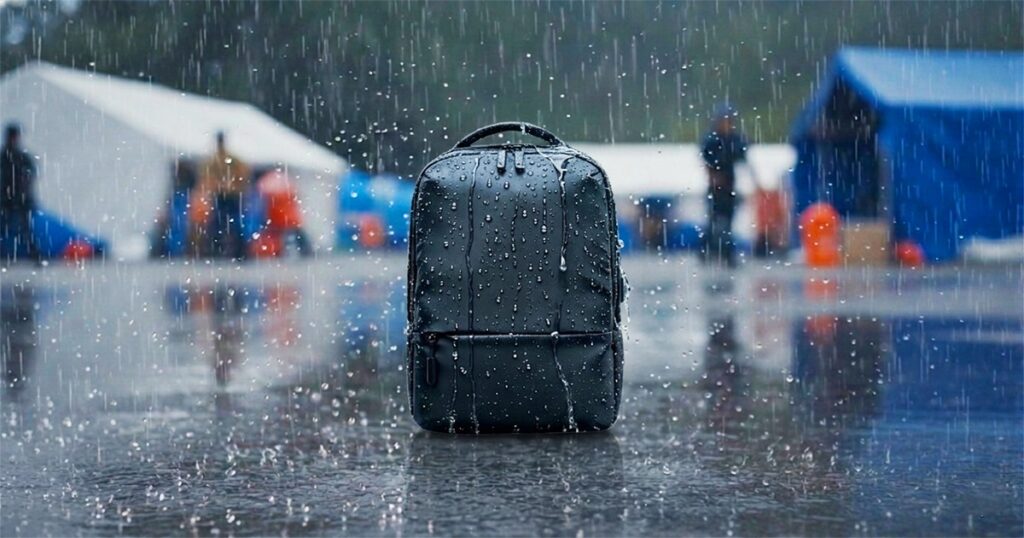
2. What Makes a Great Waterproof Relief Bag? Key Features to Look For
Not all waterproof bags are created equal. In a disaster scenario, the performance of a waterproof relief bag is tested to its limits. Here are the critical features that define a high-quality bag for flood relief operations:
Material Quality and Waterproofing Standard
The foundation of any good waterproof relief bag is its fabric. The most reliable options use 500D or 1000D PVC-coated nylon or polyester tarpaulin. These materials offer full submersion-level waterproofing, not just splash resistance. Look for bags that carry an IPX6 or IPX7 rating — indicating resistance to powerful water jets and temporary submersion respectively. For extended use in waterlogged environments, heat-welded seams are far superior to stitched seams, as needle holes can allow water ingress over time.
Load Capacity and Structural Durability
Relief bags must carry significant weight — often 20 to 40 kilograms of supplies. Reinforced base panels, double-stitched load points, and heavy-duty carrying handles made from nylon webbing are critical features. Shoulder straps with padding allow relief workers to carry bags over long distances in difficult terrain without injury. Bags that fail under load not only waste resources but can put relief workers at risk.
Closure Systems
A reliable closure system is a hallmark of a superior waterproof relief bag. Roll-top closures create an airtight, watertight seal that can be quickly opened and resealed in the field. Waterproof zippers — particularly YKK or similar brand sealed zippers — offer another excellent option. Buckle clasps provide additional security for high-value or medical-grade contents. Multiple closure layers mean added protection in extreme conditions.
Visibility and Branding
In disaster zones where visual identification is critical for logistics management, the color and branding of relief bags matters enormously. High-visibility colors — bright orange, yellow, or red — make bags easy to spot in murky floodwaters or amid large quantities of relief goods. Organization logos and labeling ensure proper inventory management and prevent theft or misuse.
Ergonomics and Portability
Waterproof relief bags must be easy to carry by relief workers on foot, in boats, or in trucks. Versatile carrying options — top handles, shoulder straps, and backpack-style harnesses — increase usability across different contexts. Collapsible or foldable designs help with storage and transportation when bags are not in use.
3. Types of Waterproof Relief Bags for Flood Operations
Waterproof relief bags come in a variety of formats, each suited to different needs within flood relief operations:
- Dry Bags (Roll-Top): The most classic waterproof option. Fully submersible, lightweight, and available in sizes from 5L to 60L. Ideal for medical kits, documents, and personal electronics.
- Heavy-Duty Relief Duffels: Large-capacity bags (60L–120L) designed to carry bulk food rations, clothing, and supplies. Built from reinforced materials with multiple carrying options.
- Backpack-Style Relief Bags: Ergonomic designs allowing relief workers to be hands-free while wading through floodwater. Equipped with padded straps, hip belts, and multiple compartments.
- Tote-Style Distribution Bags: Used for distributing individual relief kits to affected families. Reusable, clearly labeled, and typically printed with the organization’s branding.
- Medical Waterproof Bags: Specialized bags with internal organization systems for first-aid kits, medicines, and medical instruments. Often include color-coded pockets and temperature-insulated compartments.
4. The Role of Waterproof Relief Bags in Different Flood Relief Scenarios
Flood relief is not a single event — it unfolds across multiple phases, each with distinct needs. Waterproof relief bags serve critical functions at every stage:
Pre-Flood Preparedness
Before a flood, relief organizations pre-pack waterproof relief bags with standardized emergency kits. They store these bags in warehouses and community centers across flood-prone areas. When the alert sounds, workers deploy immediately — no time wasted packing supplies. And even if floodwater reaches the storage facility, the bags protect every item inside.
Emergency Evacuation
When communities must evacuate rapidly, waterproof bags serve as lifelines. Relief workers distribute pre-packed bags to evacuees at collection points, containing clean drinking water packets, food rations, hygiene items, and basic medicines. The waterproof construction ensures that contents remain usable even if bags are briefly submerged during evacuation via boat or on foot through flooded roads.
Relief Camp Operations
In relief camps, waterproof bags serve as personal storage for displaced families, protecting identity documents, mobile phones, medication, and other essential personal items. Relief workers also use larger waterproof bags to transport supplies from distribution points to individual shelters, maintaining the integrity of relief goods in consistently wet conditions.
Medical and Humanitarian Missions
Medical teams deployed to flood-affected areas rely on waterproof medical bags to protect life-saving equipment, sterile supplies, and medicines. A single contaminated medicine cache or a malfunctioning device due to water damage can have deadly consequences. Waterproof relief bags specifically designed for medical missions include foam padding, dividers, and moisture indicators to ensure the highest standards of supply integrity.
5. SIHA Bag Factory: Bangladesh’s Premier Waterproof Relief Bag Manufacturer
When it comes to procuring waterproof relief bags in Bangladesh, one name stands out above all others: SIHA Bag Factory. Based in Dhaka, Bangladesh, SIHA Bag Factory has established itself as a trusted manufacturer and supplier of high-performance waterproof bags for disaster relief, humanitarian operations, and institutional procurement across South Asia and beyond.
5.1 About SIHA Bag Factory
SIHA Bag Factory is a Bangladeshi bag manufacturing company with deep expertise in producing durable, functional bags for specialized use cases. With years of manufacturing experience and a commitment to quality, SIHA Bag Factory has become a go-to supplier for NGOs, government disaster management agencies, military organizations, and international relief bodies operating in Bangladesh and the wider South Asian region.
SIHA Bag Factory operates a modern production facility equipped with industrial sewing machines, heat-welding equipment, and quality testing tools. Every waterproof relief bag that leaves their factory undergoes rigorous quality checks to ensure it meets the demanding standards required for field deployment in flood conditions.
SIHA Bag Factory’s Waterproof Relief Bag Product Line
SIHA Bag Factory offers a comprehensive range of waterproof relief bags designed to meet the full spectrum of flood relief operational requirements:
- Heavy-Duty PVC Waterproof Duffel Bags: SIHA Bag Factory builds these bags from 500D PVC tarpaulin with heat-welded seams and reinforced carrying handles. They come in 60L, 80L, and 120L capacities. Relief teams rely on them as the standard choice for bulk supply transportation.
- Roll-Top Dry Bags: Available in 20L, 30L, and 40L sizes, these bags feature the roll-top closure system and are designed for complete submersion resistance. Ideal for medical supplies, sensitive electronics, and essential documents.
- Waterproof Backpacks for Relief Workers: Ergonomically designed with padded shoulder straps and hip belts, these backpacks allow relief workers to carry supplies in flood conditions hands-free. Internal frame support ensures comfort under heavy loads.
- Custom-Branded Relief Distribution Bags: SIHA Bag Factory offers full customization services, printing organizational logos, relief program names, and other branding elements on bags using durable, waterproof ink printing methods.
- Medical Waterproof Field Bags: Purpose-built for medical teams, these bags include internal dividers, color-coded pockets, and foam padding to protect sensitive medical equipment and pharmaceuticals.
Why Relief Organizations Choose SIHA Bag Factory
Organizations that have worked with SIHA Bag Factory cite several key reasons for their continued partnership:
- Locally Manufactured, Globally Competitive: SIHA Bag Factory bags are manufactured in Bangladesh, ensuring faster delivery times, lower logistics costs, and direct access to the manufacturer for customization and bulk orders. Their quality standards are comparable to international brands at highly competitive prices.
- Bulk Order Capability: SIHA Bag Factory has the manufacturing capacity to fulfill large-scale procurement orders — critical for government agencies and large NGOs that need hundreds or thousands of bags for a single relief operation.
- End-to-End Customization: From material selection to color, size, compartment layout, handle configuration, and branding, SIHA Bag Factory offers full customization services to meet specific operational requirements.
- Quality Assurance: Every batch of waterproof relief bags undergoes water resistance testing, load-bearing tests, and stitching quality checks before shipment. SIHA Bag Factory’s commitment to zero-defect delivery ensures that relief organizations receive exactly what they ordered.
- Ethical and Sustainable Manufacturing: SIHA Bag Factory is committed to fair labor practices and environmentally responsible manufacturing. Their facilities comply with Bangladesh’s labor regulations, and they are actively exploring the use of recycled and eco-friendly materials in their product lines.
5.4 SIHA Bag Factory’s Contribution to Bangladesh’s Flood Relief Ecosystem
SIHA Bag Factory manufactures locally — strengthening Bangladesh’s disaster resilience from within. Relief organizations no longer need costly imports for critical supplies. They can source high-quality waterproof bags from a manufacturer that knows Bangladesh’s flood-prone geography intimately. Local production also means faster response times. Communication is easier. And when disaster strikes at scale, SIHA can ramp up production quickly.
6. How to Choose the Right Waterproof Relief Bags for Your Operation
Selecting the right waterproof relief bags for a flood relief operation requires careful consideration of your specific operational context. Here is a practical framework to guide your procurement decision:
Assess Your Operational Requirements
- What will the bags carry? (medical supplies, food, documents, clothing, equipment)
- What is the expected weight per bag?
- Will bags be fully submerged, or primarily exposed to rain and splash?
- How will bags be transported — by workers on foot, by boat, or by vehicle?
- Are bags for single-use distribution or for repeated use by relief workers?
Define Your Volume and Budget
Bulk procurement reduces per-unit costs significantly. For large-scale operations, working directly with a manufacturer like SIHA Bag Factory allows organizations to negotiate pricing, customize specifications, and establish reliable supply chains. Factor in the cost of replacement versus durability — a slightly more expensive heavy-duty bag that lasts through multiple operations is far more cost-effective than cheap bags that must be replaced after every flood.
Prioritize Field-Tested Performance
When evaluating suppliers, ask for samples and test them under conditions that simulate actual field use. Fill the bags to rated capacity and expose them to water immersion. Check seam integrity, zipper performance, and handle strength. Manufacturers like SIHA Bag Factory that have experience supplying relief organizations will often have field-tested product designs and data to share.
7. The Environmental Dimension: Sustainable Waterproof Relief Bags
As the relief sector increasingly focuses on sustainability, there is growing interest in environmentally responsible waterproof bags. While PVC remains the gold standard for waterproofing performance, it has environmental drawbacks. Progressive manufacturers like SIHA Bag Factory are exploring alternatives, including recycled PET fabric with waterproof coatings, TPU (thermoplastic polyurethane) laminates, and bio-based waterproof materials. These options offer comparable water resistance with a reduced environmental footprint — an important consideration for organizations committed to sustainable humanitarian operations.
Reusable design is another key sustainability consideration. Unlike single-use plastic packaging, durable waterproof relief bags keep serving affected families long after the initial emergency. In fact, many households repurpose them as everyday utility bags during recovery and resettlement. As a result, a single bag continues to deliver value well beyond the crisis itself. Furthermore, choosing reusable bags over disposable alternatives reduces plastic waste in already vulnerable communities.
8. Case Context: Waterproof Relief Bags in Bangladesh’s Flood Response
Bangladesh’s Haor region in the northeast ranks among the most flood-vulnerable areas in the country. Every monsoon season, early flash floods submerge vast areas before rice harvests can be completed. Relief operations here depend entirely on boat-based distribution across an enormous waterlogged landscape. Moreover, this is not just rain exposure — supplies must survive extended travel across open water. Therefore, every piece of equipment must meet a far higher standard of waterproof protection.
In these operations, waterproof relief bags are not optional — they are the operational backbone. Relief workers loading boats at dawn depend on bags that will keep supplies dry through hours of water travel. Family distribution kits handed to flood victims must survive the journey from dry land to boat to flooded home to wherever a family has taken shelter. Every link in that supply chain is protected by high-quality waterproof bag construction.
SIHA Bag Factory understands Bangladesh’s flood geography and relief operations firsthand. This local knowledge shapes every bag they design and produce. They know the logistics, the climate, and what organizations actually need on the ground. Imported generic bags simply cannot match that edge.
9. Procurement Tips for NGOs and Government Agencies
For NGOs, government disaster management agencies, and institutional buyers looking to procure waterproof relief bags, here are expert procurement tips:
- Standardize Bag Specifications: Develop a clear technical specification document outlining material standards, size requirements, waterproofing ratings, load capacity, and branding requirements. Share this with your supplier upfront to ensure consistent quality across large orders.
- Request Pre-Production Samples: Always request and physically test pre-production samples before approving a bulk order. Test water resistance, load capacity, and closure performance.
- Build Long-Term Supplier Relationships: Disaster preparedness is an ongoing need. Establish multi-year procurement agreements with trusted suppliers like SIHA Bag Factory to ensure price stability and supply reliability during crisis periods.
- Plan for Pre-Positioning: Order and pre-position bags in flood-prone areas before the monsoon season begins. In other words, do not wait until a flood is declared to start procurement. Instead, treat pre-positioning as a core part of your preparedness strategy.
- Include End-User Feedback in Product Development: Engage relief workers and affected communities in evaluating bag performance after operations. This feedback should inform future procurement specifications.
10. The Future of Waterproof Relief Bags: Innovation and Technology
The field of disaster relief logistics is evolving rapidly, and waterproof relief bags are evolving with it. Several emerging innovations are shaping the next generation of waterproof relief bag design:
- Smart Bag Technology: Integration of RFID and QR code tags on bags for inventory tracking, distribution monitoring, and supply chain transparency. This allows relief organizations to track every bag from warehouse to beneficiary.
- Temperature-Controlled Compartments: Insulated waterproof compartments within larger relief bags for temperature-sensitive medicines and vaccines, critical for health-focused relief missions.
- Solar-Integrated Bags: Bags fitted with flexible solar panels to charge communication devices and medical equipment in the field — a game-changer for remote flood zones without electricity.
- Biodegradable Waterproof Materials: Research into plant-based waterproof coatings and biodegradable fabrics is advancing. In the near future, relief bags that perform as well as PVC-coated nylon but decompose naturally after use could become available.
Forward-thinking manufacturers like SIHA Bag Factory are actively monitoring these developments and investing in product innovation to ensure that their waterproof relief bags remain at the cutting edge of performance, sustainability, and functionality.
Conclusion
Flood relief operations are among the most logistically complex and emotionally charged humanitarian endeavors. Every decision made in the procurement, logistics, and deployment of relief supplies has real consequences for human lives. Waterproof relief bags — often underestimated as mere accessories — are in reality a foundational element of effective disaster response.
Choosing the right waterproof relief bags means choosing reliability, durability, and operational excellence. It means ensuring that medicines arrive dry, that food rations are protected, that relief workers can carry their loads safely, and that affected communities receive supplies in the condition they were intended.
For organizations operating in Bangladesh and South Asia, SIHA Bag Factory represents the gold standard in locally manufactured waterproof relief bags. With their deep understanding of Bangladesh’s flood context, manufacturing excellence, and commitment to quality, SIHA is the partner that relief organizations can count on when it matters most.
To learn more about SIHA Bag Factory’s waterproof relief bag product line, request a catalog, or discuss bulk procurement options, visit their website at SIHA Bag Factory. Together, let us build a more resilient future for flood-affected communities across Bangladesh and beyond.